Why this isn't a normal ticket
An army guarding an unopened tomb
The most astonishing fact about the Terracotta Army is what you don't see: the tomb of the first emperor it was built to guard has never been excavated. The buried mound remains sealed, its interior known only from ancient descriptions. So the thousands of warriors you walk past are the guardians of a still-hidden tomb — a scale of ambition that only makes sense once you understand the emperor and what lies beneath the nearby hill.
Every soldier is an individual
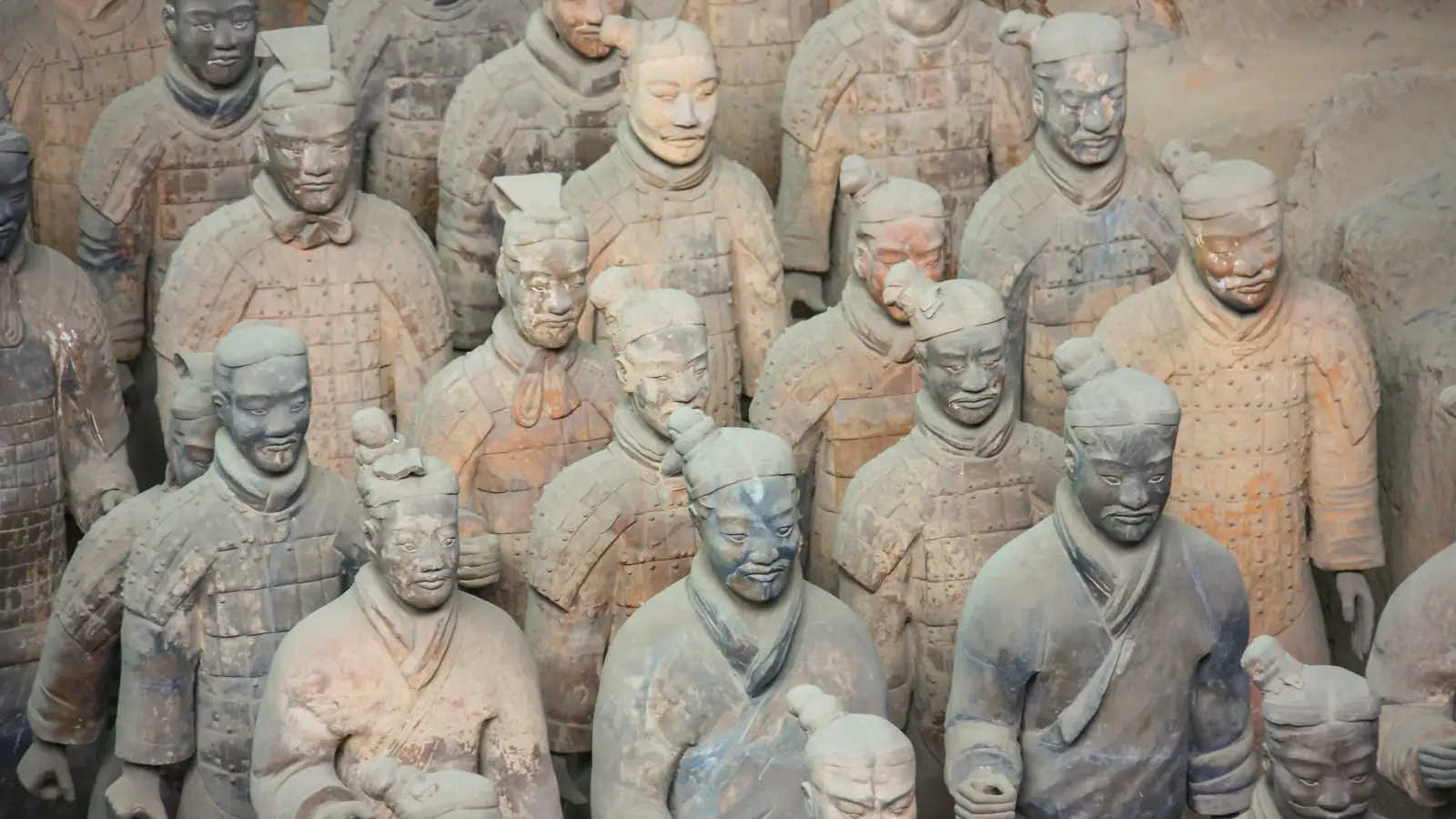
The warriors aren't identical castings. Each life-size figure was finished with distinct facial features, hairstyles, armour and rank, so that no two faces are quite the same — an army of individuals. Once excavated they were a muted grey, but many were originally painted in bright colours that faded on contact with the air. Knowing this transforms row after row of figures from repetitive into astonishing.
It's a big site best understood with context
The Terracotta Army is spread across three excavation pits of very different character, plus a hall of exquisite bronze chariots, about an hour from Xi'an. There's a lot of ground and a lot of history, and much of the meaning isn't obvious from the figures alone. That's why how you visit — with a guide, an audio guide, or good preparation — matters so much to how rewarding the day is.
The three pits, and what's in each
The Terracotta Army isn't one hall but three excavation pits plus a bronze-chariot exhibit, each very different in scale and state. Here's what you'll find in each.
| Pit / hall | What's in it | Why it matters |
|---|---|---|
| Pit 1 | The vast main pit — rows of infantry and chariots | The iconic image; the largest and most complete |
| Pit 2 | Cavalry, archers and mixed units, partly excavated | Shows the army's variety and ongoing digs |
| Pit 3 | The small command post with senior officers | The 'headquarters' of the buried army |
| Bronze chariots | Two intricate half-size bronze chariots | Masterpieces of ancient metalwork, indoors |
The pits, the history & trip-planning guides
Setting expectations
What you actually see at the Terracotta Army
Three pits, a bronze-chariot hall, and a tomb you can't enter.
Read the guide →The site in detail
The three pits of the Terracotta Army, explained
What's in Pit 1, Pit 2 and Pit 3 — and the bronze-chariot hall.
Read the guide →Logistics
Getting to the Terracotta Army from Xi'an
Tour, public bus or private car — the practical ways to reach the site.
Read the guide →Getting the most from it
Why a guide is worth it at the Terracotta Army
The figures are silent — context is what brings the army to life.
Read the guide →When to go
The best time to visit the Terracotta Army
Mild shoulder seasons, early hours, and dodging the holiday crush.
Read the guide →The story behind it
The first emperor, and why the Terracotta Army matters
The man, the ambition, and the discovery that stunned the world.
Read the guide →Questions people actually ask
Has the emperor's tomb been opened?
No. The Terracotta Army guards the tomb of China's first emperor, but the tomb mound itself has never been excavated and remains sealed. Its interior is known only from ancient accounts. Preservation concerns and the sheer scale and sensitivity of the site mean it stays unopened, so what visitors see is the guardian army in its pits, not the tomb it was built to protect.
What do you actually see at the Terracotta Army?
You see three excavation pits and a bronze-chariot exhibition hall. Pit 1 is the vast, iconic main pit with ranks of infantry and chariots; Pit 2 holds cavalry, archers and mixed units and is partly excavated; Pit 3 is the small command post. The separate hall displays two exquisite half-size bronze chariots. Together they make up the site near Xi'an.
Are the terracotta warriors all the same?
No — that's part of the wonder. Each life-size warrior was finished with individual facial features, hairstyles, armour and rank, so no two faces are quite alike. They appear grey today, but many were originally painted in vivid colours that faded when exposed to air after excavation. Seeing them as an army of individuals, once made vivid, is what makes the rows so remarkable.
How do you get to the Terracotta Army from Xi'an?
The site is about an hour from central Xi'an. You can go by organised tour (the easiest, with transfers and usually a guide), by public bus for the independent traveller, or by private car or taxi. Because the site is large and the history isn't obvious from signage alone, many visitors choose a guided tour that includes both the transfer and the context.
Is it worth getting a guide for the Terracotta Army?
For most visitors, yes. The figures are extraordinary, but much of what makes them meaningful — the story of the first emperor, how each warrior was made, what the different pits contain, why the tomb is unopened — isn't obvious just by looking. A good guide or audio guide turns rows of statues into a gripping story, which is why guided visits are so highly recommended here.
When is the best time to visit the Terracotta Army?
Spring (April–May) and autumn (September–October) offer the most comfortable weather. The site is busy year-round and especially packed during Chinese public holidays, so if you can, avoid those peak dates and arrive early in the day to see Pit 1 before the biggest crowds build. Early timing makes a real difference to the experience at such a popular site.
Terracotta Army tickets, guided tours and Xi'an day tours on Klook
See Terracotta Army tickets & tours on Klook ↗Still deciding when to go or whether to take a guide?
Leave your email and your target month — we'll send you the pits-and-access rundown for that specific window.